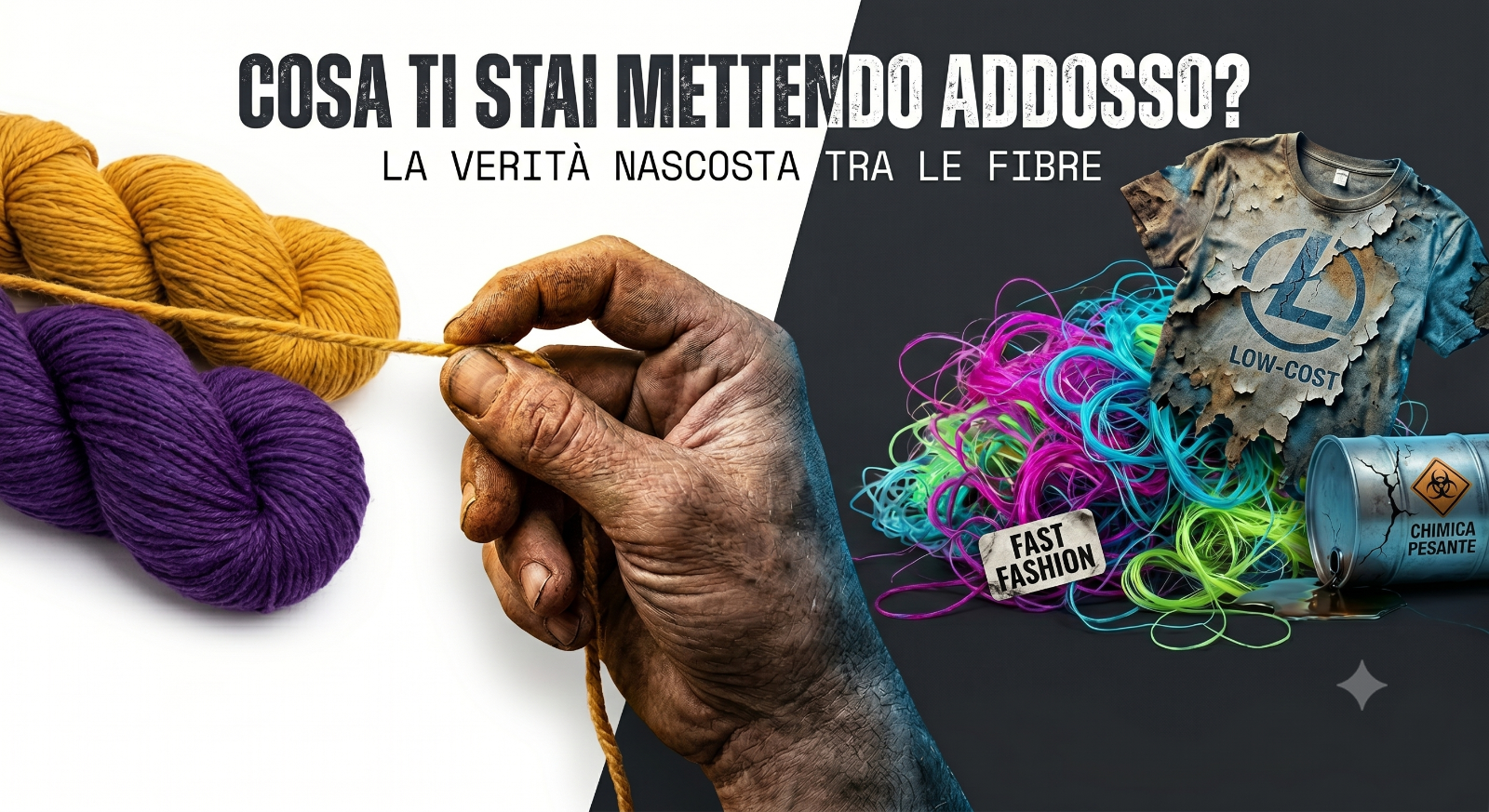
Inutile girarci intorno: oggi un brand di abbigliamento si trova davanti a un bivio. Da una parte c'è la strada comoda, quella della fast fashion, dove i vestiti si producono un tanto al chilo. Dall'altra, la caccia ossessiva alla materia prima reale.
La differenza tra una t-shirt che dura una stagione e un'armatura di tessuto che diventa parte di te non sta nel logo stampato sul petto. Sta in quello che c'è dentro il filo. E no, non è solo una questione di prezzo: è una questione di pelle.
01 Plastica contro cotone
La fast fashion ha un segreto: non vende vestiti, vende derivati del petrolio. Poliestere, acrilico, nylon. Nomi tecnici per dire una cosa sola: plastica.
Il tessuto low-costLe fibre sintetiche non respirano. Trattengono il sudore, creano l'ambiente perfetto per i batteri e, dopo tre lavaggi, perdono la forma — allungandosi o restringendosi come stracci vecchi. Diventano usa e getta.
La fibra veraIl cotone a fibra lunga, pesante e compatto, si comporta in modo opposto. Lascia respirare la pelle d'estate e mantiene il calore d'inverno. Più lo lavi, più si adatta al tuo corpo, diventando morbido senza cedere mai. È una struttura progettata per resistere alla strada, non per finire in un secchio dopo un mese.
02 Il prezzo invisibile della chimica
C'è un motivo se una t-shirt da pochi euro appena scartata ha quell'odore strano, quasi metallico. Per produrre a ritmi folli, le fabbriche della fast fashion abusano di sostanze chimiche pesanti: formaldeide per non far stropicciare i capi nei container, metalli pesanti per fissare i colori in pochi minuti, sbiancanti ottici tossici.
Quando indossi quei capi, i tuoi pori assorbono tutto. Non stai comprando un affare: stai mettendo un concentrato chimico a contatto diretto con il tuo corpo.
Esiste un'alternativa, ma è più lenta e più cara: scegliere filati puliti, trattati senza veleni, dove il cotone è cotone e il colore tiene perché il tessuto è buono — non perché è stato affogato nella chimica.
È una scelta.
Una maglia prodotta così costa di più e richiede più tempo per arrivare sullo scaffale. Ma è la differenza tra un capo che subisci e un capo di cui ti fidi.
Leggere l'etichetta prima di comprare è il gesto più sottovalutato di tutti.
Composizione, grammatura, provenienza: tre informazioni che raccontano, in tre righe, quasi tutto quello che c'è da sapere su cosa stai per metterti addosso.
No point going around it: today a clothing brand faces a fork in the road. On one side, the easy way — fast fashion, where clothes are churned out by the kilo. On the other, the obsessive hunt for real raw material.
The difference between a t-shirt that lasts one season and an armor of fabric that becomes part of you isn't the logo printed on the chest. It's in what's inside the thread. And no, it's not just about price: it's about skin.
01 Plastic vs. cotton
Fast fashion has a secret: it doesn't sell clothes, it sells petroleum byproducts. Polyester, acrylic, nylon. Technical names for one single thing: plastic.
The low-cost fabricSynthetic fibers don't breathe. They trap sweat, create the perfect environment for bacteria and, after three washes, lose their shape — stretching or shrinking like old rags. They become disposable.
The real fiberLong-staple cotton, heavy and compact, behaves the opposite way. It lets your skin breathe in summer and holds warmth in winter. The more you wash it, the more it molds to your body, getting softer without ever giving out. It's a structure built to survive the street, not to end up in a bin after a month.
02 The invisible price of chemistry
There's a reason a cheap tee, fresh out of the wrapper, has that strange, almost metallic smell. To produce at insane speed, fast-fashion factories abuse heavy chemicals: formaldehyde to keep garments from creasing in the containers, heavy metals to fix colors in minutes, toxic optical brighteners.
When you wear those clothes, your pores absorb everything. You're not buying a bargain: you're putting a chemical concentrate in direct contact with your body.
There's an alternative, but it's slower and more expensive: choosing clean yarns, treated without poisons, where cotton is cotton and the color holds because the fabric is good — not because it was drowned in chemistry.
It's a choice.
A tee made this way costs more and takes longer to reach the shelf. But that's the difference between a garment you put up with and one you actually trust.
Reading the label before you buy is the most underrated move of all.
Composition, weight, origin: three pieces of information that tell you, in three lines, almost everything worth knowing about what you're about to put on.